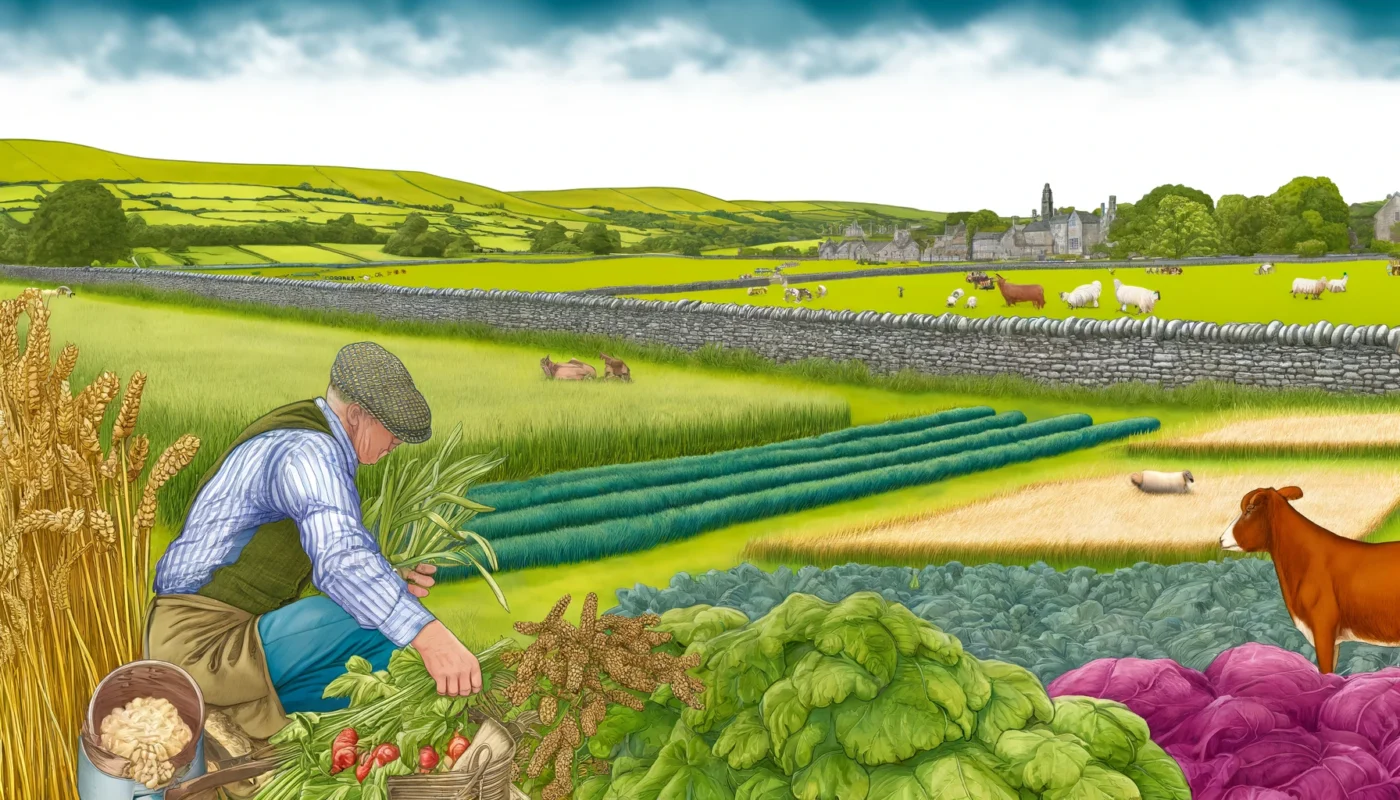
 by
by Agriculture in the United Kingdom
Capital: London
Population: 67281039
Area: 266,702 km2 (102,974 sq mi)
Agriculture in the United Kingdom: An In-depth Overview
Introduction
Agriculture in the United Kingdom presents a vibrant and diverse tapestry woven with the threads of history, innovation, and tradition. Spanning across England, Scotland, Wales, and Northern Ireland, the agricultural sector remains a fundamental component of the British economy and cultural heritage, despite the challenges and transformations over the decades.
Historical Context
The history of UK agriculture is as old as its hills. From the ancient times of pastoral nomads to the agricultural revolution in the 18th century, farming practices have evolved significantly. The agricultural revolution introduced crop rotation and selective breeding, laying the groundwork for modern farming techniques. This historical evolution has not only shaped the landscape but also the socio-economic structure of the British Isles.
 Did you fall off the barn roof and bust your keister? Life on the farm or ranch can be tough on the bum. Need a break? Laugh it off at FarmerCowboy.com, the #1 farm humor site. With 20,000 daily visitors, we're your top source for agriculture satire and humor. Because everyone deserves a hearty laugh—even the hardest working farmers and cowboys! Join us and turn those long days into fun tales at FarmerCowboy.com.
Geographical Distribution
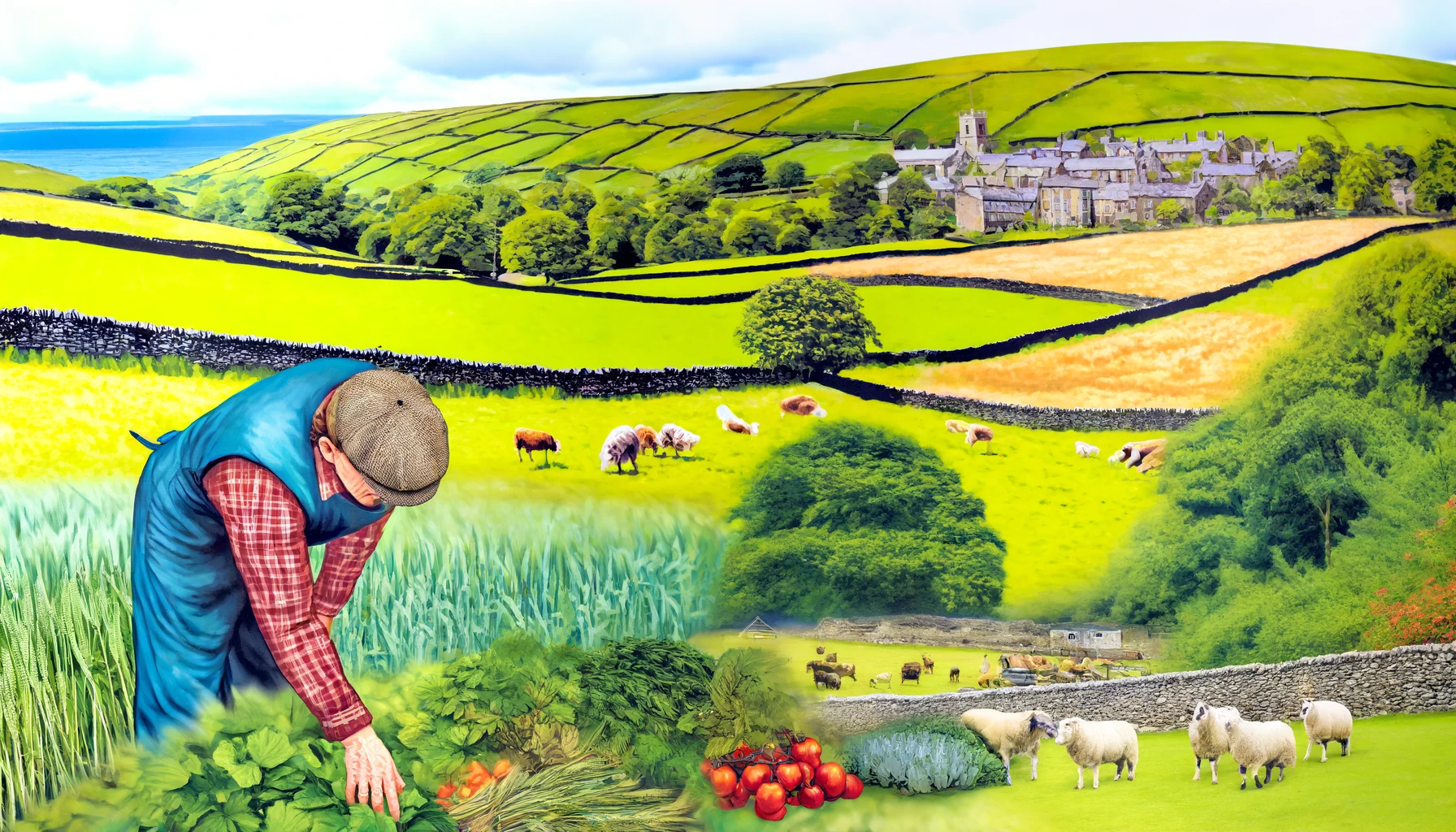
The UK’s geography significantly influences its agriculture, with varying climates and terrains across the regions. England’s fertile East Anglia is renowned for its extensive arable farming, primarily wheat and barley. In contrast, the uplands of Wales and Scotland are better suited for sheep and cattle owing to their harsher climates and rugged terrains, making crop cultivation more challenging.
Key Agricultural Products
- Cereals and Grains: The UK is a significant producer of cereals, with wheat and barley dominating the sector. The temperate climate provides ideal growing conditions for these crops, making the UK largely self-sufficient in these areas.
- Dairy: The dairy industry is another cornerstone of British agriculture, particularly in England and Wales. High-quality milk, cheese, and butter are staples, with the Cheddar cheese originating from Somerset.
- Livestock: The hills and mountains of Scotland and Wales are dotted with sheep, while beef cattle are commonly reared in the lowlands of England and Northern Ireland.
- Fruits and Vegetables: The UK also grows a variety of fruits and vegetables. Kent is famous for its orchards, often called the “Garden of England”, while the fertile soils of the Vale of Evesham and parts of Scotland are key areas for vegetable production.
Current Trends and Innovations
Technology in Agriculture
The adoption of technology has transformed UK agriculture, improving efficiency and sustainability. Precision farming technologies, including GPS and IoT sensors, allow farmers to optimize their practices, reducing waste and increasing productivity.
Organic Farming
There’s a growing trend towards organic farming as consumers become more health-conscious and environmentally aware. This method promotes biodiversity, soil health, and reduced reliance on chemical pesticides and fertilizers.
Vertical Farming
Urban agriculture is on the rise with vertical farms. These innovative setups use significantly less land and water than traditional farms, producing crops in controlled environments year-round.
Challenges Facing UK Agriculture
Brexit
The departure from the EU poses substantial challenges for UK agriculture, primarily due to changes in trade relationships and the loss of EU subsidies. Farmers must adapt to new markets and regulations, which has sparked considerable uncertainty in the sector.
Climate Change
Climate change remains a pervasive threat, impacting crop yields, water resources, and livestock. Adapting to these changes, through sustainable practices and resilience planning, is critical for the future of UK agriculture.
Labor Shortages
The agricultural sector also faces labor shortages, particularly seasonal labor for harvests, exacerbated by stricter immigration policies post-Brexit. This has led to increased interest in robotic solutions and other technologies to fill the gap.
The Role of Agriculture in the UK Economy
Agriculture contributes significantly to the UK economy, not just in terms of food production but also employment and trade. It supports industries such as food processing and agri-tech, fostering economic growth and innovation.
Conclusion
UK agriculture is a sector marked by its resilience and adaptability. Facing both challenges and opportunities, it continues to evolve, driven by innovation, tradition, and an ever-changing global landscape. As the UK charts its course post-Brexit and tackles global issues like climate change, its agriculture must balance productivity with sustainability to continue thriving in the 21st century.
Originally posted 2004-07-25 13:12:23.
Searching for some good ol' Farm-tastic Fun, Udderly Hilarious Dairy Tales, Insightful Ranching Revelations, and Rip-roaring Rodeo Antics?
